The sh@@<@<@ùt minimalist runners say (from InvisibleShoes):
The sh``*$£t climbers say (by Louder than 11):
Shit Climbers Say from Louder Than 11 on Vimeo.

Inquiries : Philosophy, Arts, Fitness, Ryabko & Vasiliev Systema (mostly translations), Martial Arts and other matters.
Friday, 17 February 2012

Friday, 10 February 2012
Moi je m'appelle Ciboulette
J'ai assisté à une représentation de Ciboulette dernièrement, une opérette en trois actes de Reynaldo Hahn, sur un livret de Robert de Flers et Francis de Croisset, créée le 7 avril 1923 au théâtre des Variétés (Paris, France).
Je ne ferai pas de critique musicale et dramatique, puisque pour des raisons indépendantes de ma volonté, j'ai dû quitter la salle avant la fin de la représentation.
L'ouvrage ne brille pas trop du côté de l'innovation. En 1867, Ciboulette, une jeune maraîchère des Halles de Paris, cherche désespérément l'amour. Une poissonnière, diseuse de bonne aventure à ses heures, lui dit qu'elle trouvera l'amour si elle peut remplir ces trois conditions: qu'elle découvre son futur époux sous un chou, qu'une femme devienne toute blanche en une seconde devant elle, et qu'elle reçoive un faire-part dans un tambour basque. Emportés dans cette aventure à mi-chemin entre une succession d'épreuves initiatiques et une destinée qui s'accomplit dans l'amour, nous suivons l'histoire de Ciboulette et de celui qu'elle finira par épouser, Antonin de Mourmelon. L'amoureux, idiot comme il se doit, est d'abord tourné au ridicule par une cocotte, Zénobie, qui lui préfère un capitaine de régiment, le capitaine Roger; puis Antonin est pris en main par un mentor, Duparquet, qui essaie de gérer comme il le peut la bêtise de son disciple, afin d'unir ces jeunes tourtereaux.
Je m'attarde un peu sur Duparquet, c'est la figure de l'amour dans la pièce. Il voit les couples se faire et se défaire. Il fait et défait des couples. Il chante et vante l'amour joyeux, bête et heureux. Il donne toujours raison aux jeunes parce qu'ils sont jeunes. Pourquoi? Parce que, comme il le dit lui-même, il fut un "amant célèbre". Lequel ? Ni plus ni moins que Rodolfo. Le Rodolfo de la Bohème de Puccini. Celui qui chante Che gelida manina. Celui qui participe au duo O suave fanciulla, etc. Voilà comment terminent les amants célèbres de l'opéra quand leur amante vont manger les pissenlits par les racines. Ils vont se refaire une santé à l'opérette.
Cette manière de jouer ouvertement avec l'amour traité dans le registre sérieux et les références du public, c'est peut-être ce qui fait la patte de Reynaldo Hahn dans Ciboulette. On le voit encore dans sa référence ouverte au fameux duo de Manon et Des Grieux (Manon, écrit par Massenet, l'un des professeurs et amis de Reynaldo Hahn):
DES GRIEUX
Toi ! Vous !
MANON
Oui, c'est moi, moi !
DES GRIEUX
Que viens-tu faire ici ?
Va-t-en! Va-t-en! Eloigne-toi !
MANON
Oui ! Je fus cruelle et coupable !
Mais rappelez-vous
tant d'amour ! Ah ! dans
ce regard qui m'accable,
lirai-je mon pardon, un jour?
DES GRIEUX
Eloigne-toi !
Au cours du 1er acte de Ciboulette, Zénobie réagit à l'interpellation du Capitaine Roger par la première réplique de Manon ("Oui, c'est moi…") à la note près.
Un détail peut-être. Reynaldo Hahn semble apprécier les amants célèbres. Pourquoi choisir 1867 comme date de contexte? Ce n'est sans doute pas à cause des nouvelles lois sur les Sociétés Anonymes publiées cette année, ou à cause de la loi Duruy. Certainement pas. En revanche, 1867, c'est l'année de création de Roméo et Juliette de Gounod au Théâtre Lyrique de Paris. Avec non pas une Ciboulero, mais une Carvalho dans le rôle de l'amante célèbre…
Quelques extraits:
"Moi je m'appelle Ciboulette", par Régine Crespin
Ce qu'est Aubervilliers? "C'est pas Paris, c'est sa banlieue", par Susan Graham:
Tuesday, 7 February 2012
Le Systema au festival des arts martiaux de Decines-Charpieu
Une vidéo de démonstration (faite par un amateur sur un téléphone portable...) sur le Systema Ryabko, avec mon instructeur Stéphane Vartanian et mes partenaires de "jeu", faite lors du 9ème festival des arts martiaux de Decines-Charpieu (4/02/2012). On y retrouve, entre autres, les classiques du Systema en self-défense: la chute, la défense au sol, la défense face à de multiples agresseurs, la défense contre un agresseur armé d'un couteau. À signaler une mention spéciale dans le JT de 19/20 Rhône-Alpes du 5 février 2012 (à partir de 21 mn environ), disponible sur Replay pour les jours qui viennent.
À noter:
*Une vidéo pro sera disponible prochainement sur cet événement. Information à venir. Stay tuned !
*Des vidéos sur les autres arts martiaux présentés à ce gala sont disponibles sur youtube.
À noter:
*Une vidéo pro sera disponible prochainement sur cet événement. Information à venir. Stay tuned !
*Des vidéos sur les autres arts martiaux présentés à ce gala sont disponibles sur youtube.
Tuesday, 31 January 2012
Le Gros, la vache et le mainate
 Cette pièce de théâtre s'est terminée par le metteur en scène Bernard Menez demandant aux spectateurs lyonnais présents de ne rien révéler sur ce qui s'est passé. Mais puisque Bernard Menez est le metteur en scène de la pièce dans laquelle il joue le metteur le scène, il n'est rien de plus qu'un acteur qui dit son texte. Il joue avec nous, jouons avec lui.
 -----------------------------------------------------------------------------------------------------------------------------
ATTENTION
LA SUITE RÉVÈLE DES ÉLÉMENTS CLÉS SUR LA PIÈCE.
À NE PAS LIRE SI VOUS VOUS PRÉPAREZ À ALLER LA VOIR.
-----------------------------------------------------------------------------------------------------------------------------Le gros, la vache et le mainate est opérette barge selon la description de la plaquette. Certes on voit bien ce que ce spectacle tient de l'opérette. L'intrigue tient du vaudeville (un couple homosexuel entouré par deux tantes -oui, des tatas, des personnes de sexe féminin, reliées par le sang ou le mariage, aux parents des membres du couple d'homos- toutes aussi grincheuses que désopilantes). On y assiste à des numéros de danse. Un mainate chante du Francis Lopez. Bref un cabaret mâtiné de musique et d'une intrigue un peu étrange, ont participé à la procréation d'un spectacle bizarroïde qui s'approche de l'opérette.
Mais c'est surtout le côté barge qui l'emporte. L'entreprise de déconstruction des mécanismes du théâtre est jusqu'au-boutiste et introduite de manière destructrice. C'est en effet la destruction progressive des éléments du théâtre qui entraîne petit-à-petit la mise à jour des présupposés d'un spectacle théâtral: le décor et les techniciens (destruction des parties du décor et annonce des techniciens), des acteurs (l'un se blesse et est remplacé par le metteur en scène qui joue le metteur en scène), la place hiérarchique du metteur en scène (la rébellion des acteurs), l'intrigue (qui se désagrège petit-à-petit), l'auteur (dont on se moque). Tout ce qui fait l'arrière-fond du théâtre, ce qui rend possible le théâtre mais qu'on ne voit pas, passe au premier plan.
Le hic évidemment est que cette entreprise de destruction n'arrive jamais à son but puisqu'elle est jouée. On n'a qu'une représentation de l'arrière-fond et non une présentation des mécanismes du théâtre en eux-mêmes. L'arrière-fond se dérobe donc toujours. On en vient à penser alors que ce n'est pas le fond de l'affaire. S'il y a bien des surprises dans le déroulement du spectacle, il y a peu d'innovation (ce qui n'est pas nécessairement un défaut) dans l'intrigue et la motivation des personnages: la naissance, la vie, l'amour, la mort. Formule simple mais toujours efficace, qui fait l'objet de cette pièce. Ces questions sont abordées à partir du point de vue de notre société: l'amour et la parentalité chez les couples homosexuels, la vieillesse et l'utilisation à outrance de la médicalisation dans les soins palliatifs, la médicalisation et l'accouchement, la modification du corps humain par la médecine, la vie (ou la mort !) sexuelle, la perte des êtres aimés et le deuil, etc.
Ce sont des pointures qu'il fallait pour jouer avec humour et provocation une pièce qui fait rire et traite sans ménagement ces sujets, et ce sont des pointures qui le font. Avec Olivier Martin-Salvan, Jean-Paul Muel, Luca Oldani, Pierre Vial, Pierre Vial, sans oublier le pianiste Laurian Daire, on se bidonne. Il n'y a vraiment pas d'autres mots. Et on se bidonne parce que manifestement, ils prennent plaisir à repousser la source du rire dans ses derniers retranchements.
Le Gros, la vache et le mainate
Une pièce de Pierre Guillois
Mise en scène Bernard Menez
Assistante à la mise en scène Sophie Cusset
avec
Laurian Daire (pianiste)
Pierre Guillois
Olivier Martin-Salvan
Jean-Paul Muel
Luca Oldani
Pierre Vial
Composition musicale François Fouqué
Décors Audrey Vuong
Lumières Jean-Yves Courcoux
Costumes Axel Aust
Direction vocale Céline Bothorel
Chorégraphe Sophie Tellier
Maquillages et perruques Catherine Saint-Sever
Arrangements musicaux Laurian Daire
Production
Le Quartz – Scène nationale-Brest
Théâtre du Peuple - Maurice Pottecher de Bussang
Saturday, 21 January 2012
A Mexican tale about life
One day a rich Westerner who had made
sqillions from speculating on the stock market was strolling along the
beach and saw the fisherman pulling in his boat with his meager catch.
The rich Westerner stopped and remarked “not much of a catch today”.
The fisherman replied “yes not much” but explained that his small catch
was enough for him and his family.
The rich Westerner asked, “But what do you do with the rest of your time?”

“I sleep late, play with my children and have an afternoon’s rest
under a coconut tree. In the evenings, I go to the local pub to see my
friends, play some music, and sing a few songs….. I have a full and
happy life.” replied the fisherman.
The rich Westerner ventured, “I have an MBA from Harvard and I can
help you…… You should start by fishing longer every day. You can then
sell the extra fish you catch. With the extra revenue, you can buy a
bigger boat. With the extra money the larger boat will
bring, you can buy a second one and a third one and so on until you have
a large fleet. Instead of selling your fish to a middleman, you can
negotiate directly with the processing plants and maybe even open your
own plant. You can then leave this little village and move to a city
from where you can direct your huge enterprise.”
“And after that?” asked the fisherman.
“After that? That’s when it gets really interesting,” answered the
rich Westerner, laughing, “When your business gets really big, you can
start selling stock in your company and make millions!”
“Millions? Really? And after that?” pressed the fisherman.
“After that you’ll be able to retire, move out to a small village by
the sea, sleep in late every day, spend time with your family, go
fishing, take afternoon naps under a coconut tree, and spend relaxing
evenings with friends…”
Author?
Thursday, 19 January 2012
Dongria Kondh’s resistance against Vedanta
Extracts:
"They [Vedanta, a mining company] want to take these rocks [bauxite, the raw material of aluminium] from the mountain. These rocks are the reason our children can live here. Because of these, the rain comes. The winter comes, the wind blows, the mountain brings all the water. If they take away these rocks, we'll all die. We'll lose our soul."
"Initially, they [Dongria Kondh, the locals] welcomed the company. But now they realize their mistake, because they live like dogs. Now they realize they've lost their land and their homes forever.
"When people said they wouldn't leave, they [Vedenta] came with bulldozers at night and demolished their home."
"But now the bauxite dust is mixing into the wells and streams."
"Now they're trying to tell us that the company will do good things. But we say, "You don't have to take care of us. We can take care of ourselves. We'll lead our lives the way we know."
Tuesday, 17 January 2012
The Crisis in Education
We are in a multi-crisis world according to experts. Our civilization is in crisis. Civilization is failing because education is also in crisis -a chain of crisis, so to speak-. Values are no longer respected and kids are disoriented. Knowledge is being taken over by specialized skills, and many things that were known and considered the pillars of humanity are being forgotten. Wisdom is obsolete, nobody seeks nowadays to develop his/her soul and to find peace of mind. Habits are battled away by the constant changes and enormous leaps in civilization, i.e., those who learned a set of essential habits to live and appreciate the world as it was don't understand anymore and can't live in the new
Tuesday, 6 December 2011
Links and thoughts about static stretching
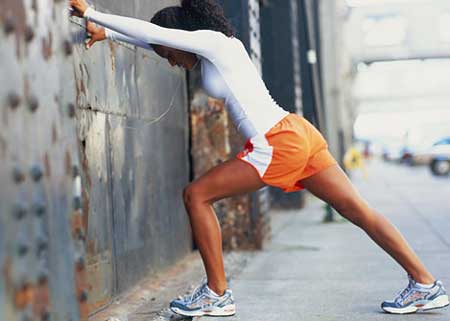
Many runners stretch before and after a workout or a competition. Often they do static stretching, i.e. they strech a muscle by elongating it, in a static posture for 15-30s or more. The idea is that if we stretch a muscle before and after an effort, it will gain power, elasticity, and it will decrease the chances of being injured.
However, you have to admit that the idea lacks of intuitivity: if you extend a rubber band to its maximum capacity and hold it that way for a long time and repeatedly, then when you relax the tension, at some point, you'll notice that it has lost its capacities, that it has become too loose.
Researchers interested in the biomechanics of sport and physical activities tried to show if static stretching had any benefits. What they found out, when results weren't completely negative (I mean not corroborating the hypothesis that static stretching shows an identified benefit), is that things aren't clear. USA Track & Field conducts a study where results about health benefits are... Well, not clear. See the summary published by Gretchen Reynolds in Does stretching before running prevent injuries:
The study, one of the largest of its kind, involved almost 1,400 runners, from age 13 to past 60, who were assigned randomly to two groups. The first group did not stretch before their runs, while otherwise maintaining their normal workout routine: the same mileage, warm-up (minus any stretching) and so on. The second group stretched, having received photographs and specific instructions for a series of simple, traditional poses, like leaning over and touching toes, that focused on the calf, hamstring and quadriceps muscles. The volunteers were told to hold each stretch for 20 seconds, a technique known as static stretching. The entire routine required three to five minutes and was to be completed immediately before a run.
The volunteers followed their assigned regimens for three months. Predictably, since running, as a sport, has a high injury rate, quite a few became injured during the three months. About 16 percent of the group that didn’t stretch were hobbled badly enough to miss training for at least three days (the researchers’ definition of a running injury), while about 16 percent of the group that did stretch were laid up for the same amount of time. The percentages, in other words, were virtually identical. Static stretching had proved to be a wash in terms of protecting against injury. It “neither prevented nor induced injury when compared with not stretching before running,” the study’s authors concluded, raising the obvious corollary, so why in the world do so many of us still stretch?
To continue with the "non-clear" effect, Gretchen Reynolds, in To stretch or not to stretch, gathers some recent studies where it is shown that, if someone maintains the position of a static stretching for less than 30s, she/he will experience no "detrimental effects". Indeed it seems that over that length of time, you are likely to hurt yourself and diminish your capacities. But that leaves open the question of the benefit of static stretching in the less than 30s condition: does it help us to get injury-free? to be more powerful? faster? What's the point of stretching if it doesn't help us in any way?
In Stretching: the truth, Gretchen Reynolds contrasts static stretching and dynamic stretching. It's an interesting read. According to GR and the background studies of this article, the problem with static stretching is that it doesn't fill the required conditions of stretching: i) increasing the range of motion of joints and, ii) warming up body's temperature.
Personally I stretch dynamically before some workouts, but not every time (some samples of dynamic stretching can be found in Stretching: the truth). If you have to run to save your life or save the life of someone, you will not have a hint 15mn before to warm up. You just run when it's needed.
Sunday, 4 December 2011
Running as a global experience
Why do we run ? According to my experience, we run to flee (from an aggressor or from our anxiety), to hunt (a bus when we are late or a deer when we are hungry), to play (with our friends on Saturday morning).

Running is a global experience. With the feelings on my skin, I know the quality of the air; with the feelings on my feet, I know what is right under my feet where I stand. With my eyes I know what is just in front of me. With my nose, I know what I can't see, what is behind the next bush. With my ears, I know how things move in any direction, especially what is behind me and on my sides. The touch for the present and where I stand; the hearing for the past and what is behind me and on my sides; the view for the short-term future and what is right in front of us; the smell/ taste for the long-term future and what is far ahead.
Being mindful of my sensory system helped me to get rid of pressure of performance, and improved my technique and posture. Indeed I think we have this finely atune and precise global sensory system for one and only one thing: to adapt, to adjust to our environment. It's not our will or desires that shape our behavior, but the interaction between our capacities and the environment. It's not a pair of shoes with flying wings that dictates if I can run fast everywhere, but how my body can react to my environment with its capacities. If you start thinking about how it hurts to run on sharp rocks, and start thinking about the reason behind this kind of pain (I mean ache not suffering), you begin to realize that your sensory system is not just bothering you and preventing you to achieve your PR, but telling you how to adjust to your environment with the capacities you have. The interaction between the environment and our capacities show us how we can adapt to the features of our environment with efficiency and safety. (Consequence: don't mess with things that alter your sensory system and your brain chemistry, or seclude your sensory system from its environment.)

Friday, 25 November 2011
Parutions du recueil "La Philosophie expérimentale"
 Les éditions Vuibert font paraître un volume de recueil d'articles sur la philosophie expérimentale : Dutant, J., Machery, E., Knobe, J., Nahmias, E., Cova, F., Nichols, S., (eds) (2011), La Philosophie expérimentale. Paris : Vuibert.
J'ai traduit l'article de Nahmias, Morris, Nadelhoffer, et Turner : L'incompatibilisme est-il intuitif ?
Subscribe to:
Posts (Atom)